How to Prepare Your Child for Their First Eye Test (and What to Expect)

Last updated: August 2026
A first eye test can feel like a big deal to a small child, and to the parent wondering how they’ll cope in the chair. Will it hurt? Do they need to read letters? What if they won’t sit still?
Here’s the reassuring part: an eye test for a young child is painless, it doesn’t require them to read or even know their letters, and a good one is designed to feel like a game. Most children are surprised by how easy it is.
This guide walks you through when to book that first test, simple ways to prepare your child at home, exactly what happens at the appointment, and how to keep a nervous child calm.
Key Takeaways
- Eyes can be checked at any age, but a full eye test is commonly recommended around age 3, and again before your child starts school.
- Your child does not need to read or know their letters. Optometrists use pictures, shapes and matching games for young children.
- An eye test is painless. Occasionally drops are used to widen the pupils, which sting briefly and blur vision for a few hours.
- A little preparation at home, talking about it positively and having a practice run, makes a big difference.
- The results simply tell you how your child’s eyes are developing. Needing glasses is common and is not something to worry about.
At What Age Should a Child Have Their First Eye Test?
A child’s eyes can be tested at any age, even before they can talk. You do not need to wait until they can read.
As a general guide, a full eye examination is often recommended around age 3, and again before your child starts school. After that, regular eye tests every year or two are a good idea while your child’s vision is still developing. Testing earlier makes sense if you, your GP, or your maternal and child health nurse has noticed something, such as an eye that turns, frequent squinting, or a family history of eye problems.
If your child has already started school and has never had a test, it is not too late. Booking one now is a good idea, especially if they are finding reading or concentration hard.
Is a School Vision Screening Enough?
A school or health-check vision screening is useful, but it is a brief check of distance vision, not a comprehensive eye test. A full eye examination checks visual acuity (how clearly your child sees), eye health, focusing, and how the two eyes work together. Some vision problems pass a screening but show up in a proper test, which is why early detection matters.
How to Prepare Your Child at Home
The goal is simple: help your child arrive curious rather than worried. A few small things in the days beforehand go a long way.
- Talk about it positively and simply. If the word “test” makes your child anxious, call it “a visit to the eye doctor” instead.
- Have a practice run. Play “eye doctor” at home with a torch and some pictures on the wall to point at. Familiar beats unknown.
- Pick a good time of day. Book for when your child is usually rested and fed, not near a nap or at the end of a long day.
- Bring a comfort item. A favourite toy or blanket can settle a nervous child in a new place.
- Read a book or watch a short video about visiting the optometrist, so the setting feels familiar.
- Reassure them there are no needles and nothing will hurt. Children often imagine the worst, and a simple, honest reassurance settles most nerves.
Try not to over-prepare or over-warn. Long, serious conversations can accidentally signal that there is something to fear.
What Actually Happens at the Eye Test
Knowing the steps ahead of time helps you explain them to your child, and calms your own nerves too. Most children’s eye tests follow a similar pattern.
- A friendly chat first. Your optometrist will ask how your child is going, whether you have any concerns, how they are finding school, and whether eye problems run in the family. This shapes the whole appointment.
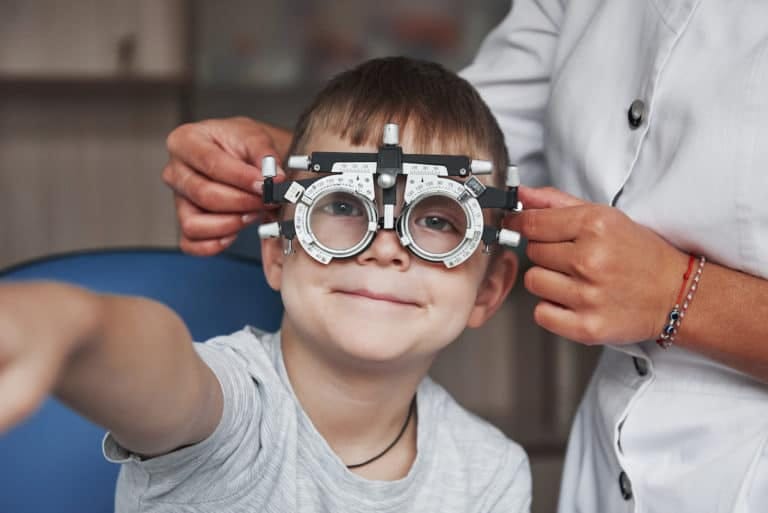
- Child-friendly sight testing. Instead of an adult eye chart, young children match pictures, shapes or symbols, or point to which way a shape faces. This checks for long-sightedness, short-sightedness and other focusing issues, and there is nothing your child can get “wrong”.
- Checking how the eyes work together. Your optometrist will watch how your child’s eyes move, team up and judge depth perception, usually through simple games with a light or a small target to follow.
- An eye-health check. A light is used to look inside the eye. Sometimes drops are used to widen the pupils for a clearer view. These sting for a few seconds and leave vision blurry and light-sensitive for a few hours, so bring a hat or sunglasses if drops are likely.
- A plain-language wrap-up. Your optometrist will explain what they found and whether anything needs glasses, a follow-up, or a referral.
A comprehensive children’s assessment often goes further than checking eyesight alone. It can also look at the visual skills behind reading and concentration, such as eye tracking and how well the eyes focus together. If your child passed a standard sight test but still struggles at school, that fuller kind of assessment is worth asking about. You can read more on our behavioural optometry page.
A thorough test can also pick up common eye conditions early, such as a lazy eye (amblyopia) or a turned eye, which often have no obvious signs and respond best when caught early.
Tips for an Anxious or Sensitive Child
Some children take new places in their stride. Others need a gentler approach, and that is completely normal.
- Go first yourself. Let your child watch you sit in the chair and look at the chart. Modelling calm is powerful.
- Let them sit on your lap. Most optometrists are happy for a young or nervous child to stay close to you during testing.
- Ask for the steps to be explained as they happen, so nothing is a surprise.
- Keep your own tone light. Children read your body language before they hear your words.
If your child is autistic or sensitive to new sensations, it helps to call ahead. Let the practice know so they can allow extra time, keep the room calm, and adjust the pace. Bringing headphones, a fidget toy or a familiar item can make the visit much smoother.
After the Test: What the Results Mean
If your child needs glasses, try to treat it as good news rather than bad. The test has done its job, and early support helps your child see and learn comfortably. Plenty of children wear glasses, and many are excited to choose their own frames.
Some children do not need glasses but do benefit from a follow-up down the track, because young eyes keep developing. Your optometrist will tell you when to come back.
If you want to understand exactly what a full children’s assessment covers before you book, our kids eye test page walks through it in detail.
Frequently Asked Questions
How do they check a 3-year-old’s eyes? With pictures, shapes and matching games rather than letters. Your optometrist also uses a light to check eye health and watches how the eyes move and work together. None of it requires your child to read or give complicated answers.
What should I avoid doing before an eye test? Avoid booking near nap time or at the end of a tiring day, and try not to over-warn your child, which can build unnecessary nerves. A rested, relaxed child gives the most accurate results.
Are children’s eye tests covered by Medicare? A standard eye test for a child is covered by Medicare and is often bulk billed, meaning no out-of-pocket cost. A more in-depth behavioural or visual-skills assessment may carry a fee. It is best to check costs with the practice when you book.
Will my child need eye drops? Sometimes. Drops are used to widen the pupils so the optometrist can see clearly inside the eye. They sting briefly and blur vision for a few hours, so plan for a quieter afternoon afterwards.
How long does a children’s eye test take? Most first appointments run for a set block of time that allows the optometrist to work at your child’s pace. A more detailed assessment usually takes longer than a quick sight check. Ask when booking so you can plan your day.
Can my child have an eye test if they cannot read yet? Yes. Reading is never required. Optometrists have picture-based and matching methods that test vision just as accurately in toddlers and pre-readers.
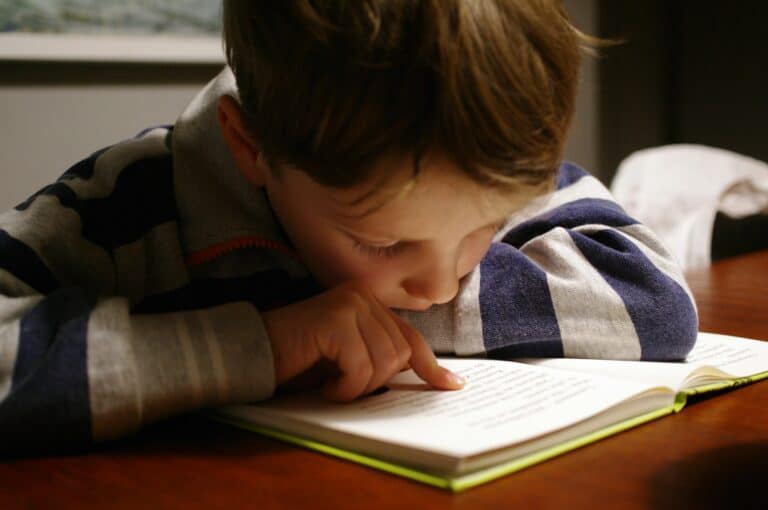
What are the signs my child might have a vision problem? Common signs include squinting, sitting very close to screens, tilting the head to see, frequent eye rubbing, sensitivity to light, covering or closing one eye, and losing their place when reading. Some children show no obvious signs at all, which is exactly why a routine eye test matters.
Book Your Child’s Eye Test at Eye Care for Kids
At Eye Care for Kids, we test children of all ages, and our gentle, unhurried approach helps even nervous children feel at ease, which gives us more accurate results. If you are unsure whether your child is ready, you are welcome to call and talk it through first.
We see families at two Melbourne clinics:
- Narre Warren: Suite 5, 26-28 Verdun Drive, Narre Warren VIC 3805
- Caulfield: Suite 1, 242 Hawthorn Road, Caulfield VIC 3161
Call (03) 9972 2722 or book online to arrange your child’s first eye test. Our Narre Warren clinic serves families across Casey, Berwick, Cranbourne and Pakenham, and our Caulfield clinic serves Malvern, Armadale, Glen Eira and the surrounding suburbs.
This content is for general information only and does not constitute clinical advice. Individual assessment findings and treatment outcomes vary for each child.

Marvin Janet is a Senior Optometrist (Dip Optom SA, FOA, MCOptom) with 20+ years in paediatric and behavioural optometry, helping children overcome the vision problems that get in the way of reading and learning.